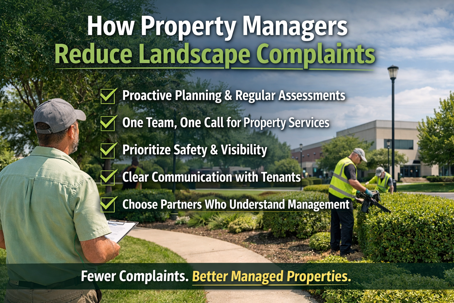
The good news? Most landscape complaints don’t come from the landscape itself. They come from how landscaping is managed.
Here’s how property managers can significantly reduce landscape complaints while protecting property value and saving time.
Start With Proactive Planning, Not Reaction
Many landscape issues become complaints because they’re addressed only after something goes wrong. Reactive landscaping leads to inconsistent results and frustrated residents or tenants.
Reducing complaints starts with a clear, proactive plan. This includes defined service scopes, seasonal expectations, and regular evaluations of site conditions. When landscaping is planned ahead of time, issues are resolved before they become visible problems.
Conduct Regular Site Assessments
Annual or routine site assessments are critical for identifying issues early. These assessments help uncover drainage problems, declining plant material, safety risks, and areas of wear before complaints arise.
For properties with trees, annual tree assessments are especially important. Trees are one of the highest liability risks on a property, and unmanaged tree issues often lead to safety complaints after storms or high winds.
Proactive assessments reduce surprises—and surprises are what generate complaints.
Reduce Vendor Fragmentation
One of the fastest ways to increase complaints is to manage multiple vendors for landscaping, tree care, irrigation, lighting, and pavement services. When responsibility is divided, issues fall through the cracks.
Property managers see fewer complaints when one accountable team manages the exterior environment. A single point of contact improves communication, speeds up response times, and ensures problems don’t get passed from vendor to vendor.
Focus on Safety and Visibility First
Many landscape complaints are rooted in safety concerns—blocked walkways, poor lighting, overgrown shrubs, or failing trees. These issues often matter more to residents and tenants than aesthetics.
By prioritizing safety, visibility, and access, property managers reduce both complaints and liability exposure. A well-managed landscape should support how people move through and use the property every day.
Communicate What’s Being Done—and Why
Silence creates complaints. Even when work is being performed correctly, a lack of communication can make residents feel ignored.
Clear communication about service schedules, upcoming improvements, and known issues builds trust. When people understand what’s happening and why, they’re far less likely to complain.
This applies equally to internal communication between property managers and service providers. Clear expectations and regular updates prevent misunderstandings before they escalate.
Choose Partners Who Think Like Property Managers
The most effective way to reduce landscape complaints is to work with partners who understand property management—not just landscaping.
Experienced commercial landscape partners think in terms of risk, operations, consistency, and long-term performance. They plan ahead, communicate clearly, and take ownership of outcomes rather than reacting after complaints surface.
The Bottom Line
Property managers reduce landscape complaints by shifting from reactive fixes to structured management. Proactive planning, regular assessments, fewer vendors, safety-focused decisions, and clear communication all work together to create better outcomes.
When landscaping is managed intentionally, it becomes one less problem to solve—and one less inbox full of complaints.
Want to Reduce Landscape Complaints on Your Property?
If you’re looking for a commercial landscaping partner who understands how properties are managed and how complaints are prevented, we’re ready to help.
Discuss Your Property Needs
One team. One call. Clear accountability.